A transmission estimate worked through line by line
Follow a clearly labeled hypothetical transmission estimate from labor multiplication through credits, deposits, and unresolved exclusions.
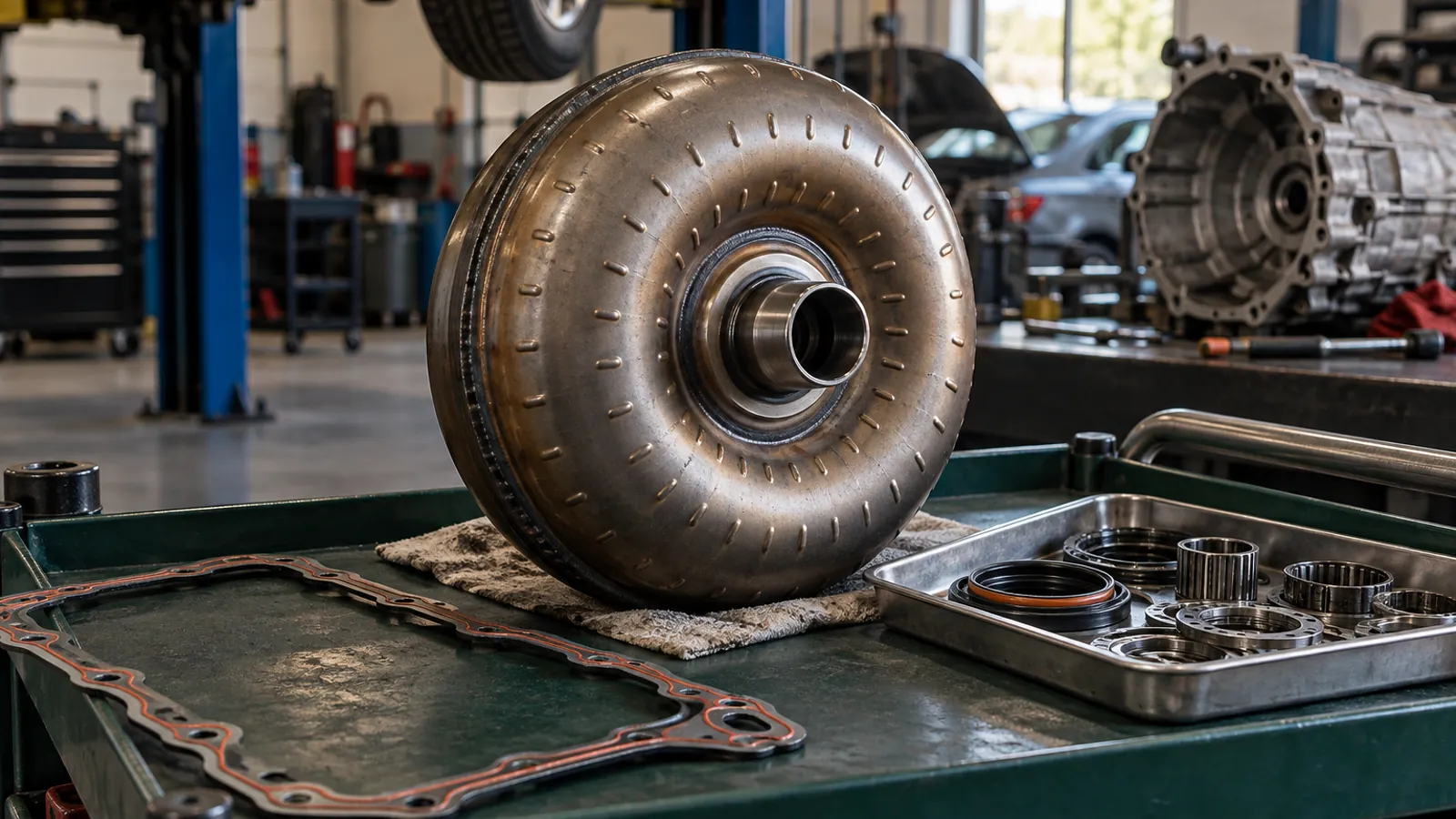
A transmission estimate becomes easier to evaluate when you separate the installed scope from the arithmetic. This page follows one entirely illustrative proposal. None of the amounts are typical prices, surveyed averages, or a quote for your vehicle. Replace every input with your own written estimate and ask a repair professional whether the proposed job fits the findings.
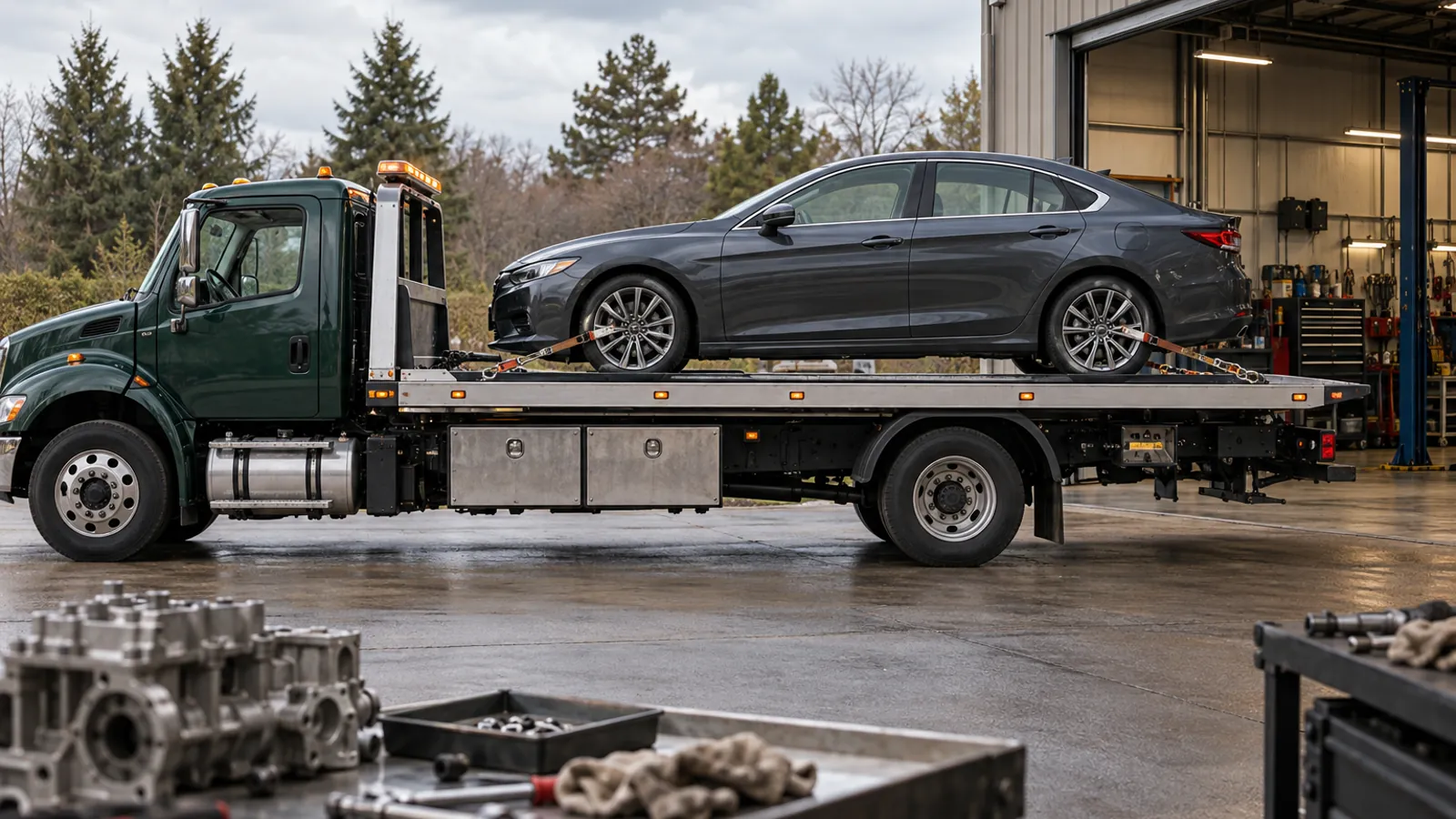
In this fictional scenario, the shop has proposed a replacement transmission after diagnosis. The customer has not yet approved installation. The useful next task is to identify what the total includes and what remains unresolved, not to infer that replacement is always the right response to a shifting complaint. The example also does not establish a labor time for any vehicle.
Add the stated charges
Assume 8 labor hours at $125, a $2,400 replacement assembly, $180 for stated supporting parts and fluids, and $120 diagnostics. The arithmetic is 8 × $125 = $1,000 labor. Adding the other lines gives $1,000 + $2,400 + $180 + $120 = $3,700 before tax, credits, and any excluded costs.
| Illustrative line | Amount |
|---|---|
| Labor | $1,000 |
| Assembly | $2,400 |
| Supporting materials | $180 |
| Diagnostics | $120 |
| Subtotal | $3,700 |
Before using that subtotal, confirm whether the assembly description, installation, required setup, and verification are actually included. An accurate sum can still represent an incomplete job. The labor worksheet can reproduce the labor-plus-fixed-cost calculation using 8 hours, $125 in both rate fields, and $2,700 fixed charges.
Handle credits and deposits separately
Suppose the written proposal states that the $120 diagnostic charge will be credited if installation is approved. The adjusted subtotal becomes $3,580. If a $300 refundable core deposit is collected separately, the initial amount before tax becomes $3,880. A later full core refund would reduce net cost by $300, subject to the supplier’s acceptance terms.
Do not assume a core refund or diagnostic credit merely because they appear in this exercise. Ask the real shop about deadlines, conditions, freight, and who receives the refund. If your estimate already excludes the credited diagnostic charge, do not subtract it again. If you previously paid a deposit, distinguish that payment from a reduction in the agreed job price.
Expose the missing items
Now suppose programming is not mentioned. Mark it unresolved rather than entering zero. Ask whether the particular vehicle needs it, whether the installer includes it, and whether another provider will perform it. Do the same for any cooler-related work, freight, or supporting repairs the technician says are necessary. These questions are not a universal instruction to replace particular components.
Tax must come from the actual estimate because taxable items and treatment vary. A personal contingency percentage is also separate from tax and from authorization. If you use a 10% illustrative planning allowance on $3,580, it adds $358 to your own budget scenario. It does not allow the shop to spend another $358 without the agreed approval process.
Choose the next authorization
A complete response to this hypothetical proposal would include the exact assembly condition, written warranty, core terms, tax amount, scope of setup, and the method for authorizing changes. If teardown is still required to finalize the job, ask for a staged estimate rather than calling $3,580 a guaranteed installed price.
At pickup, compare the invoice with the last authorized version and confirm that the diagnostic credit and deposit appear as agreed. Keep the assembly identification, supplier coverage, and any follow-up requirements. If the original symptom remains, document the conditions and contact the shop under the stated process. This example is about understanding a bill; it is not evidence that the repair has been diagnosed, completed correctly, or fairly priced.
Check the example against your own document
When transferring this method to a real estimate, copy each amount with its description rather than copying only the subtotal. Use the shop’s actual labor method. If it quotes a flat labor charge, do not invent hours to imitate this example. If materials are already included in the assembly line, leave them there instead of adding them again.
Mark every amount that is conditional on teardown, supplier availability, or further testing. Keep a separate list for exclusions the shop has confirmed. A conditional amount and an excluded item are different: one may change, while the other is outside the price altogether.
After the shop answers your questions, run the arithmetic again from the revised estimate. Save the worksheet with the version used. The useful output is a transparent calculation tied to a real scope, not a seemingly precise estimate generated from unrelated example inputs. Ask the shop to reconcile any difference before approving the next stage.
Questions before you decide
Can I use these amounts for my car?
No. They are deliberately hypothetical teaching inputs. Obtain a current vehicle-specific estimate.
Why are the initial payment and net cost different?
A refundable core deposit can affect initial cash needs even if it is later returned. Refund terms control the outcome.
Does the contingency authorize extra work?
No. A private planning allowance is separate from the shop’s authorization limit.
Continue with the same decision
- How to read an itemized repair estimate
- Compare two repair estimates without losing the scope
- An engine estimate worked through line by line
- Compare repair approaches
- Use the total worksheet
Official sources and limits
- Federal Trade Commission — Auto Repair Basics — written estimates, repair terminology, and warranty questions.
Source links checked October 30, 2026. Dollar examples are illustrative, not surveyed prices. State-specific requirements are labeled and must be checked for the location of your repair. No licensed mechanic or attorney has reviewed this guide.