An engine estimate worked through line by line
Separate the assembly, installation, supporting work, credits, and transportation in a hypothetical engine replacement budget.
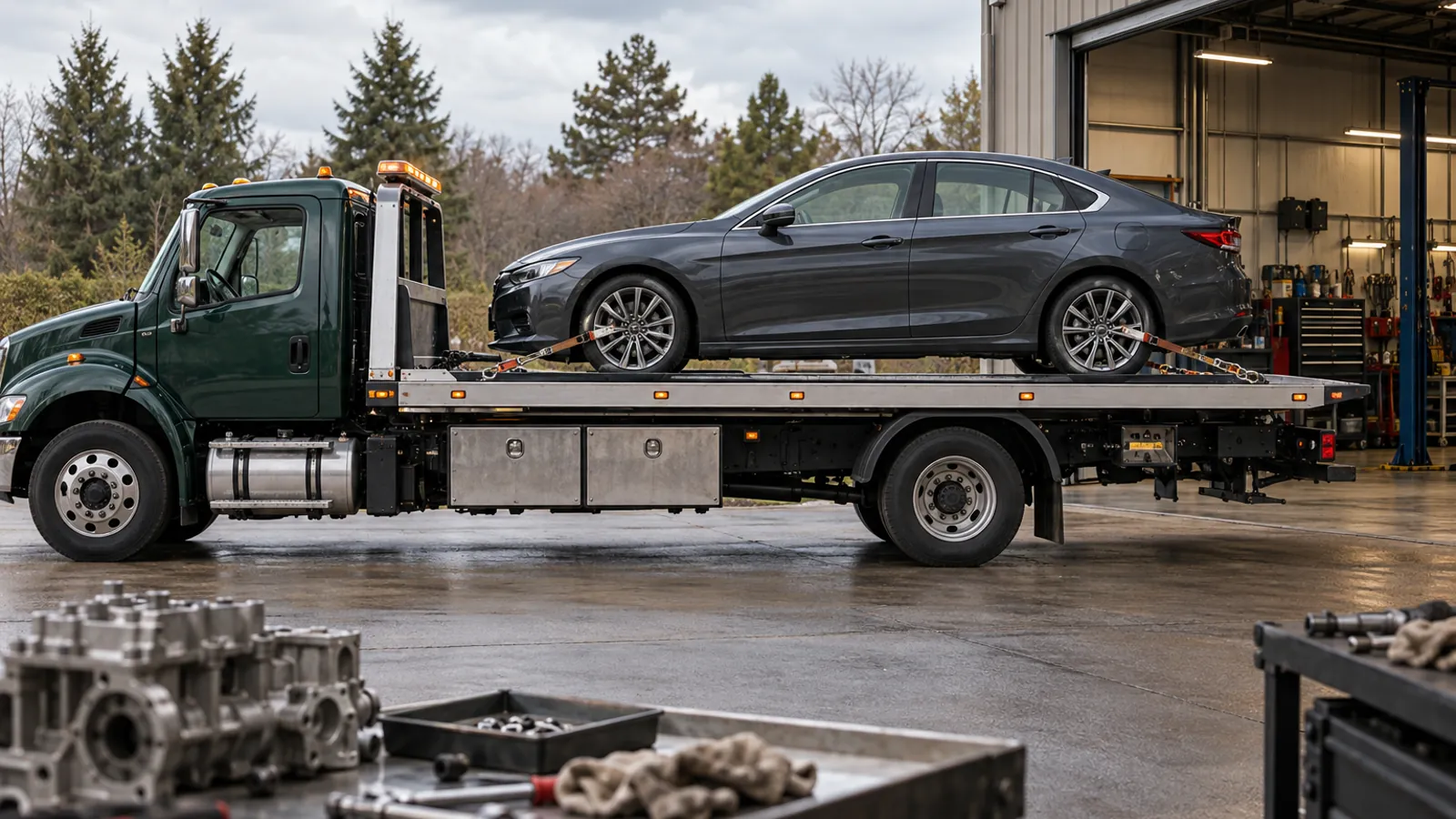
An engine repair budget should distinguish the shop’s installed-job total from transportation, towing, and other personal costs. This page uses a fictional replacement proposal to demonstrate the difference. Every dollar amount and labor assumption is illustrative. It is not a market range or a recommendation to replace an engine.
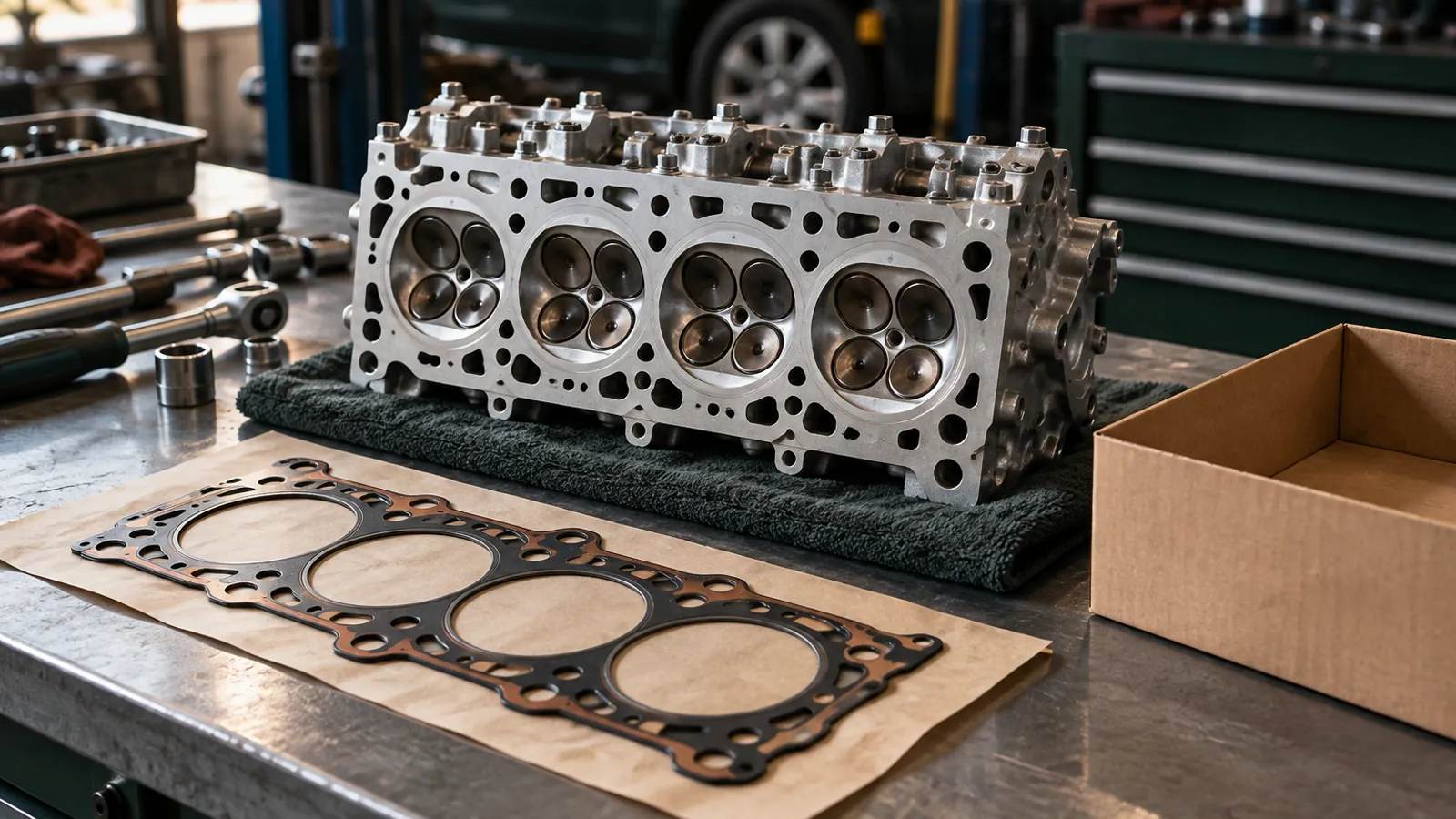
Begin with the diagnosis and the assembly description. Ask what evidence supports replacement, what components are included, what will transfer from the old engine, and whether the plan corrects the cause of the damage. If those answers are missing, a clean spreadsheet cannot make the repair scope complete. Get technical clarification before using the example as a template for approval.
Calculate the repair subtotal
Assume a hypothetical assembly costs $3,000, installation labor is a flat $1,500, related work is $400, and fluids and materials are $200. The subtotal is $3,000 + $1,500 + $400 + $200 = $5,100 before actual taxes and other stated charges. Because labor is flat in this exercise, do not invent an hourly rate or divide the charge into a purported real-world labor time.
| Illustrative category | Amount | Question |
|---|---|---|
| Assembly | $3,000 | What is included? |
| Installation | $1,500 | What setup is covered? |
| Related work | $400 | Required or optional? |
| Materials | $200 | Already in another line? |
The categories are organizational aids. A real shop may combine them differently. Ask enough to understand the complete scope, not to force every shop into this exact format.
Add actual quoted tax and external costs
If this fictional shop quotes $240 in tax, the shop total becomes $5,340. That $240 is an assumed amount, not a calculated US tax rate. If the customer separately budgets a hypothetical $120 tow and $300 temporary transportation, the broader cash budget is $5,760. Those separate services are not necessarily part of the repair shop’s invoice.
Keep refundable deposits separate. If a deposit is required before parts are ordered, it changes payment timing but may not increase the agreed total. Ask whether it is refundable if availability changes or if you decline after further diagnosis. Do not infer a universal refund right from this example; contract terms and applicable law matter.
Test a change without hiding it
Suppose the shop later finds a necessary additional item quoted at $250 before any applicable tax. The repair subtotal changes from $5,100 to $5,350. Request the finding, revised scope, price, and approval request. A personal contingency may help you decide whether the change is affordable, but it does not replace authorization.
If the additional work is optional preventive maintenance rather than required for installation, ask the shop to identify that distinction. Compare the cost of doing it now with the consequences of deferring it, using the technician’s explanation and actual quote. This article does not predict which components need replacement or promise that access-related work will save a particular amount.
Check the coverage and handover
Before approval, obtain the assembly and labor warranty, including exclusions, required procedures, and the claim contact. Ask whether transport, diagnosis, removal, and reinstallation are covered if a supplied engine fails. Coverage on an assembly does not automatically settle every installation expense.
Before pickup, reconcile the final invoice to the revised estimate, check deposits and credits, and obtain written follow-up instructions. If there is a maintenance or inspection requirement for coverage, record the timing given by the actual supplier rather than using a generic internet schedule. Keep documents together for any later sale or claim. When the diagnosis or cause correction remains unclear, a qualified second opinion can be more valuable than refining a hypothetical budget.
Use three columns for the final budget
Make columns for confirmed shop charges, confirmed external charges, and personal assumptions. Put the installed engine scope in the first column, separately arranged towing in the second, and an optional contingency in the third. This prevents a private planning assumption from appearing to be a shop quote.
If the shop bundles a service, describe it as bundled rather than assigning an invented share of the price. If another proposal separates that service, ask enough questions to compare the total scope. You do not need to guess the internal cost of every component to make a fair comparison.
Review the payment timing separately from net cost. A deposit, an expected refund, and a final balance can occur at different times. If affordability depends on receiving a credit first, confirm the actual timing before agreeing to the work. A spreadsheet that adds correctly can still hide a cash shortfall if timing is ignored.
Questions before you decide
Does the example tax apply where I live?
No. The assumed tax amount is used only to demonstrate addition. Obtain the actual tax on your written estimate.
Should towing be in the repair subtotal?
Keep it separate unless the shop includes and bills it. Avoid adding the same charge twice.
Can I infer labor hours from the flat price?
No. Ask the shop what its flat charge covers instead of inventing a rate and time.
Continue with the same decision
- How to read an itemized repair estimate
- Compare two repair estimates without losing the scope
- A transmission estimate worked through line by line
- Compare repair approaches
- Use the total worksheet
Official sources and limits
- Federal Trade Commission — Auto Repair Basics — written estimates, repair terminology, and warranty questions.
Source links checked October 30, 2026. Dollar examples are illustrative, not surveyed prices. State-specific requirements are labeled and must be checked for the location of your repair. No licensed mechanic or attorney has reviewed this guide.