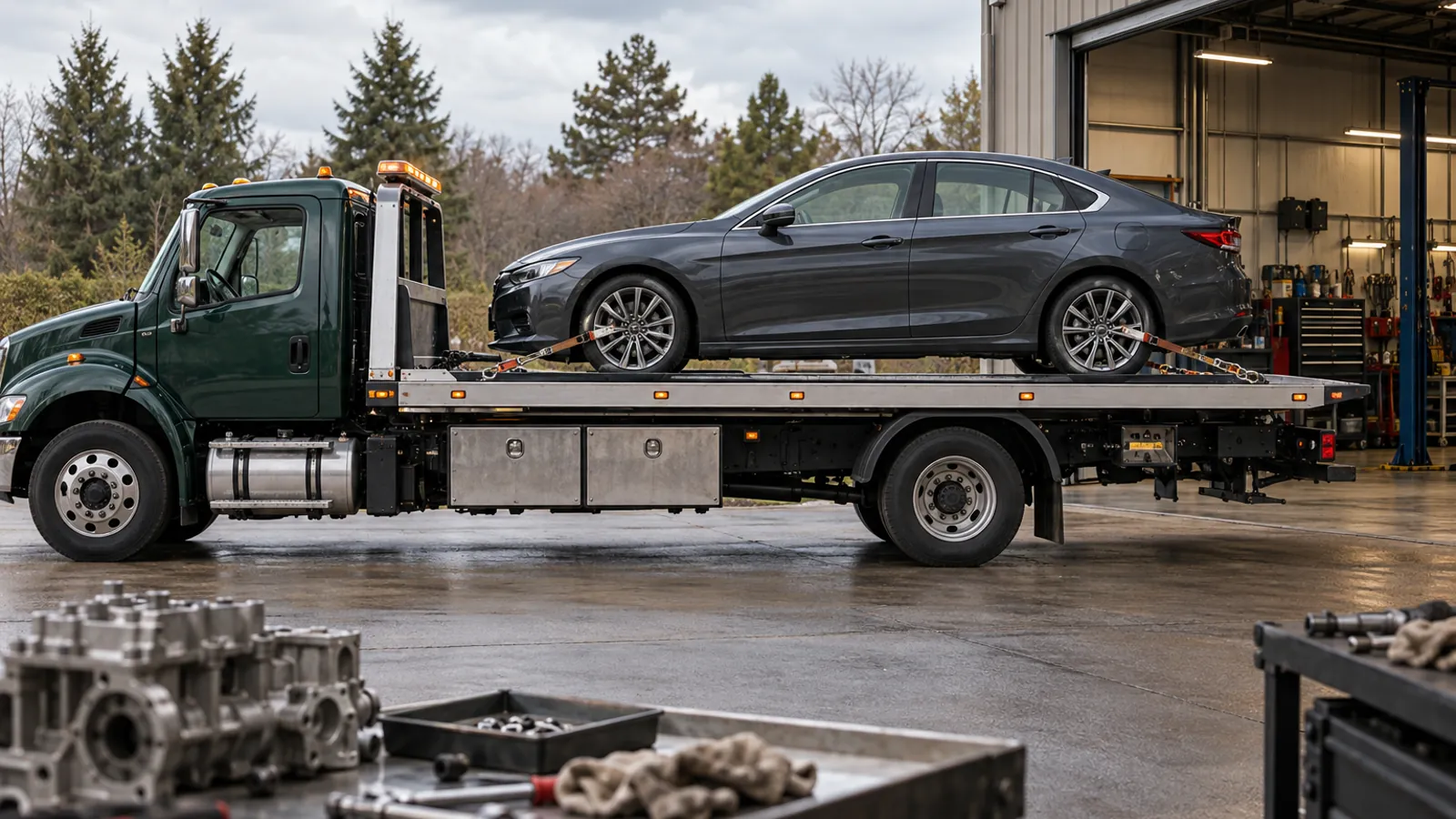
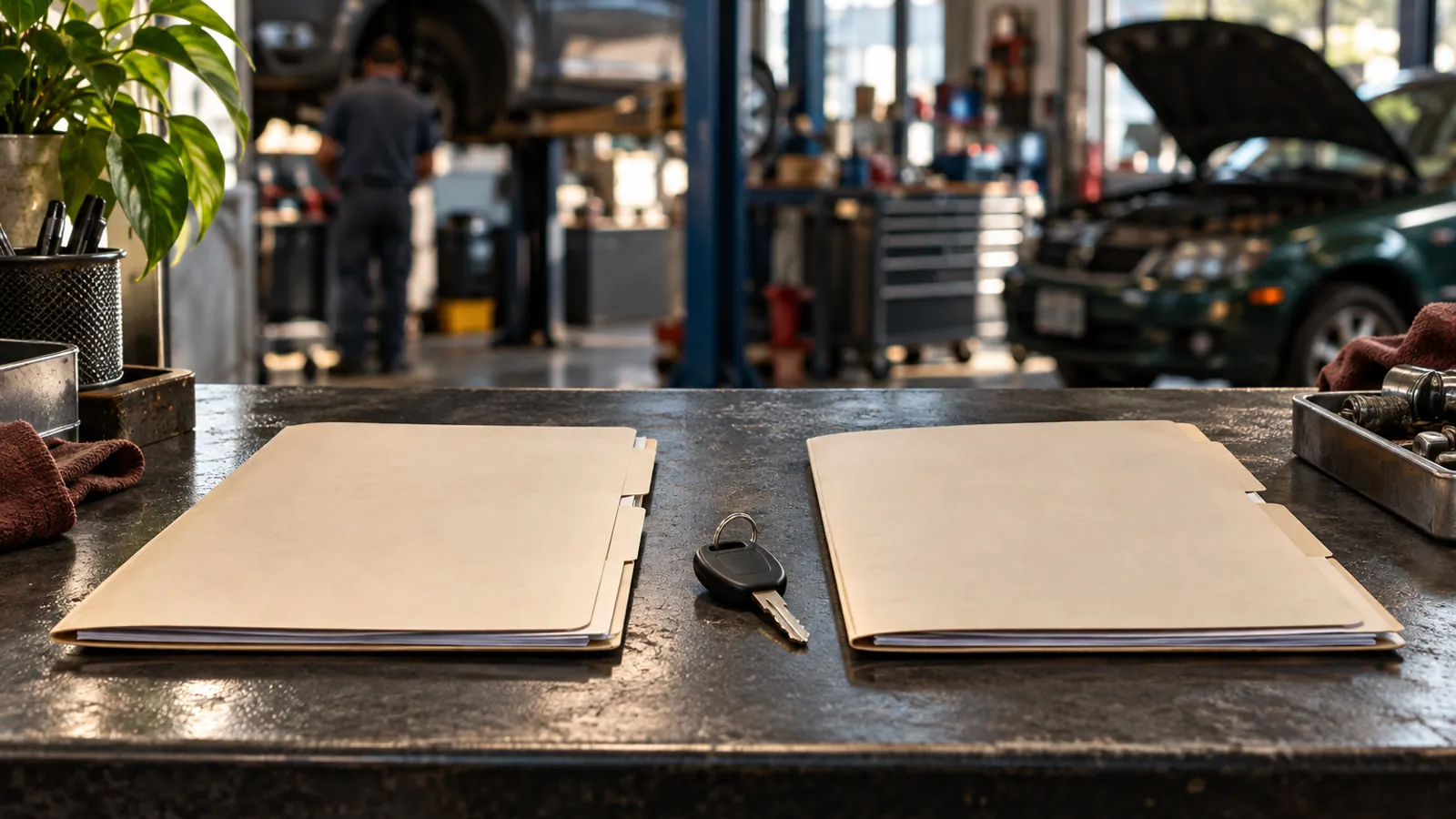
A repair authorization checklist for a major job
Turn open questions about diagnosis, parts, cost limits, and change approvals into a written authorization plan.
Before approving a major engine or transmission job, identify the work, the price or spending limit, and the point at which the shop must ask again. A checklist is useful because an estimate can be detailed about parts while leaving authorization vague. It cannot tell you whether the vehicle has been correctly diagnosed or whether the document meets every state requirement.
Start with the original complaint. Confirm the shop understands the symptom you want addressed and what it found. Ask whether you are approving investigation, teardown, repair, or a combination. If the next stage is diagnostic, request the deliverable and the stopping point rather than signing an unlimited approval for whatever later appears necessary.
Resolve the scope questions
Use the saved checklist on this site during the conversation, but keep the actual agreement in the shop’s documents. Mark an item complete only when you have a clear answer. An informal reassurance that everything is included may still leave important exclusions unstated.
- Record the complaint and diagnostic findings.
- Identify the assembly and its stated condition.
- Separate installation, supporting work, and optional work.
- Ask about programming and verification where applicable.
- Confirm tax, fees, credits, freight, and core terms.
- Obtain the written warranty and claim process.
- Agree on the approval limit and contact method.
- Ask about storage, reassembly, and pickup if you decline.
Do not use the checklist as a universal required-parts list. The qualified technician should identify the procedure that fits the vehicle. Your role is to understand what you are authorizing and preserve a usable record.
Write the next decision gate
A useful authorization note might say that you approve only the listed diagnostic stage up to the agreed amount, with further work awaiting a new approval. Use the shop’s actual process and ask it to confirm the record. This is a communication example, not a legal form or a promise that a particular sentence creates enforceable rights.
In an illustrative case, you approve a $200 investigative stage and receive a proposed $3,800 repair afterward. Those are hypothetical amounts. Approval of the first stage should not be casually treated as approval of the second. Ask the shop to distinguish the two documents and identify how any diagnostic charge carries into the final job. State requirements for authorization and estimates differ.
Plan for changed findings
Ask what happens if a different assembly is available, a supplier changes, or teardown reveals additional damage. Who contacts you, what information will be supplied, and what work pauses while you decide? If someone else is authorized to approve for you, make that arrangement clear. A missed call should not become a misunderstanding about consent.
Consider practical constraints before leaving the vehicle: how long you can be without it, whether it can be towed if you decline, and when storage charges may begin. Use actual terms rather than assumptions. A clear refusal to approve additional work does not automatically eliminate previously agreed diagnostic or reassembly charges. Ask about those exit costs before they become urgent.
Keep the final record
Save the estimate, signed authorization, revisions, messages, invoice, warranty, and payment receipts together. At pickup, check that the installed assembly and completed tasks match the last approved scope. Ask for an explanation of any difference and keep the answer with the documents.
The checklist stores only your progress in this browser and does not send information to a shop. Clearing site data or using a different browser may remove that progress. Do not treat checked boxes as evidence that the shop agreed to something; retain its actual written response. For a disputed authorization, consult the repair regulator or consumer agency in your state. A lawyer may be appropriate when significant legal rights, payment, or vehicle possession are contested.
Check the checklist with another person
If another household member will answer the shop’s calls, agree on the scope and spending limit together. Tell the shop who can approve changes and how that approval should be recorded. A shared understanding avoids a situation where one person believes only diagnostics were approved while another approves installation during a brief call.
Before drop-off, read the authorization document rather than relying only on the checklist on this site. Ask the business to explain wording you do not understand. The checklist is a memory aid and cannot modify the shop’s contract or establish that a particular legal requirement has been met.
When all items are checked, review the unresolved technical questions once more. Completion means you have answers to the listed questions, not that the repair is guaranteed to succeed. If a central diagnostic question remains unanswered, keep it visible in the record and consider whether further investigation or an independent opinion is appropriate before irreversible disassembly.
Questions before you decide
Does checking a box authorize the shop?
No. This site is separate from the repair business. Use the shop’s actual authorization process and keep its written record.
Can the checklist prove the repair is necessary?
No. It organizes questions. A qualified professional must inspect and diagnose the vehicle.
What if the shop cannot reach me?
Agree beforehand on what work stops, the contact method, and any authorized representative. Do not leave the approval process ambiguous.
Continue with the same decision
- How to read an itemized repair estimate
- Compare two repair estimates without losing the scope
- A transmission estimate worked through line by line
- Compare repair approaches
- Use the authorization checklist
Official sources and limits
- Federal Trade Commission — Auto Repair Basics — written estimates, repair terminology, and warranty questions.
- California Bureau of Automotive Repair — Write It Right — California-specific documentation and authorization guidance.
Source links checked October 30, 2026. Dollar examples are illustrative, not surveyed prices. State-specific requirements are labeled and must be checked for the location of your repair. No licensed mechanic or attorney has reviewed this guide.