Document a repair dispute with a useful paper trail
Build a factual timeline, reconcile the authorized scope, and preserve evidence before escalating a repair or warranty disagreement.
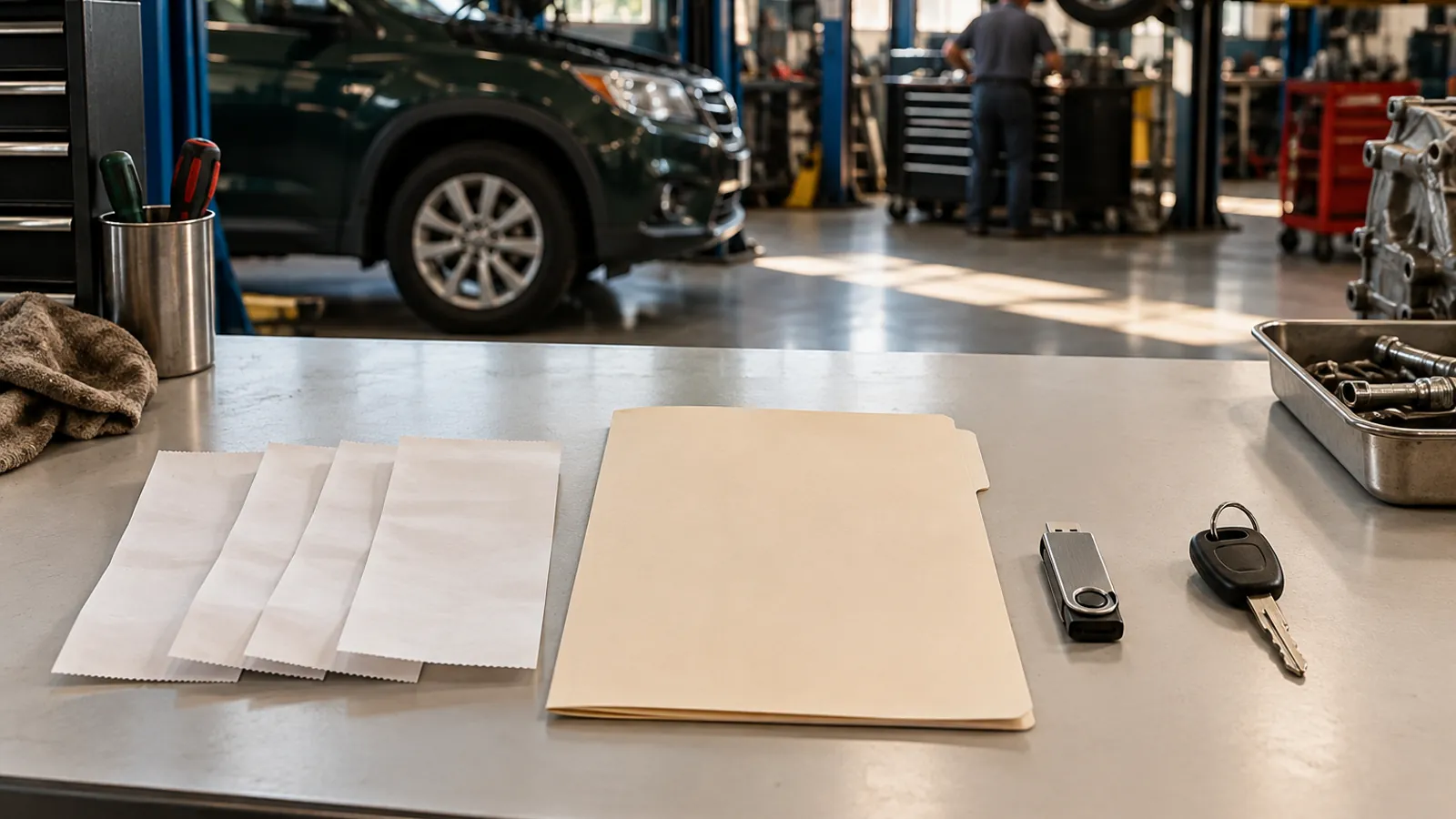
A useful repair-dispute record identifies what was agreed, what happened, and what remedy you are asking for. Start with one clear issue rather than a broad accusation. Examples include an unapproved task, a missing promised credit, a different assembly than the estimate described, or the return of the original symptom. This site does not determine who is legally responsible.
Separate technical uncertainty from a billing disagreement. A symptom returning does not by itself prove the same part failed, and a large invoice does not by itself prove the work was unauthorized. Ask for the diagnostic explanation and compare the documents. If the vehicle is unsafe, follow professional guidance about moving it while the paperwork is reviewed.
Build the record in chronological order
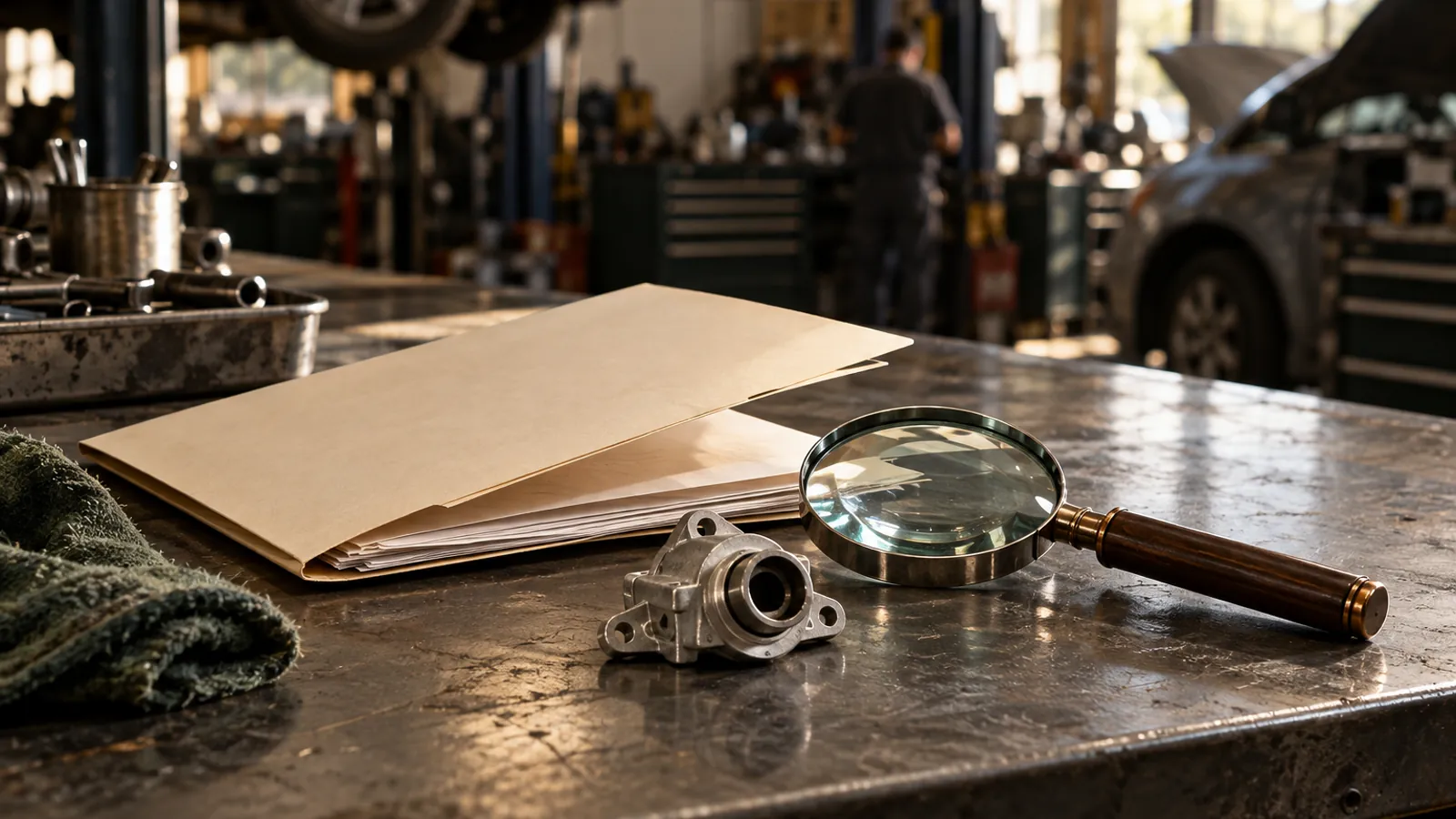
Keep originals and make copies for submission. Use dates and amounts from actual documents, not memory where records exist. If a conversation was by phone, make a factual note and ask the shop to confirm important points in writing. Do not invent a quotation or present your recollection as a verbatim transcript.
- Original complaint and drop-off record.
- Estimate and the version you approved.
- Revised findings and authorizations.
- Invoice, payment receipts, deposits, and credits.
- Parts description and warranty document.
- Messages and the shop’s responses.
- Independent findings, if obtained.
Label missing records as missing. A timeline with honest gaps is more useful than a complete-looking narrative built from assumptions. Keep personal information out of public reviews and send sensitive documents only through the recipient’s appropriate channel.
Reconcile the amount in dispute
Suppose an illustrative approved subtotal is $3,500 and the final subtotal is $3,850. Identify the $350 difference by line rather than arguing only about the grand total. If $200 is a separately approved task and $150 is unexplained, the unresolved billing question is the $150. These numbers are hypothetical and do not establish whether any real charge is lawful.
Similarly, distinguish a deposit already paid from a discount and a conditional core refund from an unconditional credit. Request the shop’s explanation of any new line or missing adjustment. Save a corrected invoice alongside the original. If the dispute concerns quality rather than billing, ask a qualified professional what evidence is needed and how further repair may affect that evidence.
Ask for a concrete response
Write a concise request that identifies the vehicle job, the disputed item, supporting documents, and the remedy you seek. A remedy might be an explanation, correction of the invoice, inspection under warranty, or another specifically described action. Do not claim a right to a remedy you have not verified. Ask the business to explain its position in writing.
If a warranty is involved, follow the stated claim and approval process. Before another shop disassembles or replaces parts, ask the warrantor about inspection requirements and evidence preservation. Do not discard relevant components merely to simplify storage. If you are uncertain about legal rights or time limits, contact a qualified attorney or the appropriate state agency promptly.
Choose the escalation route
A repair-shop regulator, state consumer agency, manufacturer, service-contract administrator, payment provider, or court may handle different parts of the problem. Ask each recipient whether the issue falls within its authority and what documents it needs. A NHTSA safety complaint serves a different purpose from a request for a refund or warranty reimbursement.
Do not assume submitting a complaint suspends payment obligations, storage charges, a lien process, or legal deadlines. Get advice specific to your location and circumstances. Keep a log of submissions and responses and avoid sending originals unless required. The aim of the paper trail is to let a neutral reader understand the agreement and the precise dispute without relying on emotional summaries or unsupported technical conclusions.
Keep the evidence readable
Name files in date order and use short descriptions such as original estimate, revised authorization, invoice, or warranty response. Keep a separate note for your interpretation rather than editing the original document. This lets a reviewer distinguish the record from your argument about it.
If you send an evidence packet, include a short index and reference the relevant page or line for each disputed item. Avoid sending a large collection of unrelated maintenance records without explaining why they matter. If an administrator asks for a specific record you do not have, say so and ask whether an alternative is acceptable.
Use factual language in public statements as well as formal complaints. Describe what you observed and what the documents show, and avoid claiming credentials or technical conclusions you do not possess. A concise, accurate record is more useful to a neutral reviewer than an exaggerated account. Preserve sensitive vehicle and personal details when sharing material publicly.
Questions before you decide
Should I leave the vehicle while complaining?
Ask about condition, pickup, and storage terms, and obtain local advice if possession or payment is disputed. A complaint may not pause charges.
Can I call the repeat symptom proof of failure?
Describe the symptom factually. A qualified diagnosis is needed to identify the cause.
Do I need every document before contacting an agency?
Ask the agency what it needs and check deadlines promptly. Do not delay seeking guidance merely because a record is missing.
Continue with the same decision
- Repair warranties: ask what happens on the second visit
- Check recalls and manufacturer coverage before paying
- When a second opinion helps with a major repair
- Compare repair approaches
- Use the authorization checklist
Official sources and limits
- Federal Trade Commission — Auto Repair Basics — written estimates, repair terminology, and warranty questions.
Source links checked October 30, 2026. Dollar examples are illustrative, not surveyed prices. State-specific requirements are labeled and must be checked for the location of your repair. No licensed mechanic or attorney has reviewed this guide.